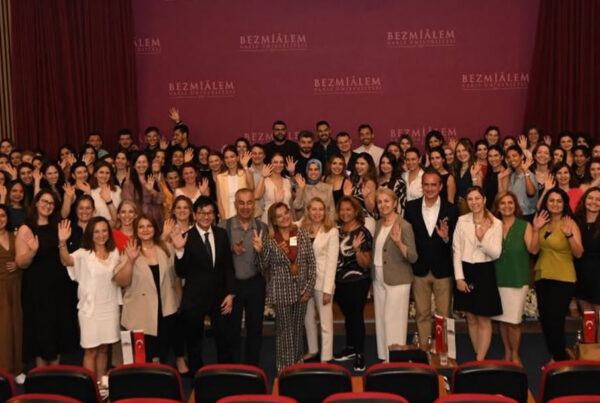
The global symposium of the Society of Orthodontic Specialty
Certifying Boards took place during the 10th IOC in Rio de Janeiro on October 22, 2025.
Participants including orthodontic board presidents, examiners from multiple orthodontic boards worldwide as well as interested orthodontic practitioners participated in round table discussions moderated by assigned orthodontic leaders. Dr. Roberto Hernandez Orsini, the current president of the American Board of Orthodontics, gave the opening address which was followed by Dr. Orsini’s delivery of Dr. Jae Park’s presentation (Dr. Park could not be present at this meeting).
The deliberations highlighted the need for furthering the recognition of board certification. The topics discussed are provided below with highlights of each group’s discussion of specific questions. Additional information is available from the WFO Executive Committee.
Identifying Barriers to Board Certification
Discussion leader: Dr. Mala Ram Manoha, India
Most attendants favored a 2-step examination with the first being a remote written exam and the second phase an in-person examination with clinical case presentations. Records of the selected cases could be sent digitaly beforehand to the examiners to expediate the case review.
Feasible Modifications to Board Certification Processes
Discussion leader: Dr. Maria Madrazo, Argentina.
Most participants favored a digital board examination right after graduation and then, five years later, a clinical oral exam composed of case-based scenarios (provided by the certifying board) and case presentations (provided by the examinees), to demostrate clinical skills. Regional testing centers could minimize travel and reduce expenses for the examiners and examinees.
Increasing the Number of Board-Certified Orthodontists
Discussion leader: Dr. Giorgio Iodice, Italy
Participants urged advertising the value of board certification at regional meetings by designating an opportunity for recently certified orthodontists to share their experiences with the certification process and how it benefited them. Regional affiliated societies should encourage all orthodontists and students, in their educational institutions, to participate in the board certification process.
Standardized Certification Requirements
Discussion leader: Dr. Susan Al-Khateeb, Jordan
The members at the table expressed concern about the lack of standardization of minimun requirements in their educational institutions. They thought that the lack of minimum educational standards is a barrier to the global standardization of a board certification process.
The Role of Educators in Board Certification
Discussion leader: Dr.Jayesh Rahalkar, India
There was agreement that the educators should encourage the attainment of orthodontic board certification. The challenge discussed was that most educators in global institutions were not board-certified. Lack of requirements regarding qualifications for participation as full or part-time faculty made this goal difficult to attain.
There was no concensus on whether residents should use clinical cases treated during training for certification. Many expressed their concern about using cases from residency for board certification.
Supporting Board Certification Promotion
Discussion leader: Dr. Alberto Caprioglio, Italy
Participants felt that the affiliate societies could encourage their leaders and members to organize for the formation of regional certifying boards, followed by outreach to already established orthodontic board certifying agencies in other regional areas. The goal of the latter would be to start the exchange of ideas regarding the formation of a new board certifying body, including policy development. The SOSCB could act as a mediator among interested entities.
Remote Certification Exams
Discussion leader: Dr. Dennis Lim, Philippines
The majority of the participants support a 2-step certification process. The first step would consist of a remote written exam and a clinical exam, in which case-based scenarios and clinical cases are presented.
Responses varied among participants regarding whether their institutions have the necessary video conferencing facilities for residents. Geographic locations in which such resources are more readily available had better technological facilites than others.
Adapting Case Requirements for Board Certification
Discussion leader: Dr. Eman Abdulbaset Alnamnakani. Saudi Arabia.
The removal of case requirements may make it more attractive to participate in the certification process. The participants were in agreement that clinical cases treated by the examinees should remain as a requirement for board certification. They also agreed that the requirement of specific types of cases could be eased out.
The Value of Board Certification from an Educator’s Perspective
Discussion leader: Gustavo Zanardi.Brasil.
All participants agreed that the number of board-certified orthodontists among alumni, is a reflection of an academically stronger program. It was also discussed that programs that evaluate and grade their residents’ finished cases reflect excellence.
The Value of Board Certification for Orthodontic Graduate Programs
Discussion leader: Dr. Padma Mukherjee, USA
Group members agreed that board certification is a good method to demostrate the effectiveness of clinical teaching, and therefore the quality of the program.
Exam Structure Comparison
Discussion leader: Dr. Nita Viwattanatipa, Thailand
The group recommended a two-step process including a written exam and clinical scenario-based cases provided by the board. A hybrid process would include a literature-based multiple-choice exam and a clinical scenario-based section with cases provided by the board. Most participants supported a two-step process with a written portion and a clinical-based exam with cases provided by the examinees.
Promoting Board Certification Worldwide
Discussion leader: Dr. Rocio Casasola. Costa Rica
Initiatives could promote and encourage the implementation of board certification across different regions, with affiliate societies encouraging their leaders and members to organize for the formation of regional certifying boards.
Timing of Board Examinations
Discussion leader: Dr. Roberto Hernández Orsini, Puerto Rico
Group members felt that two exams per year could be sufficient. Resources were discussed and many agreed that one exam per year is more feasible.
Certification Consideration for Requirement to Practice
Discussion leader: Dr. Peerapong Santiwong, Thailand
There was no support for offering the certification exam during the residency program. Administration of board exam after graduation from a specialty program and an opportunity to treat cases is preferred.
Need for Recertification
Discussion leader: Dr. Chaiyapol Chaweewannakorn, Thailand
There was consensus on the need for recertification. Some group members preferred certification renewal every five years while others expressed desire to see it every 10 years.