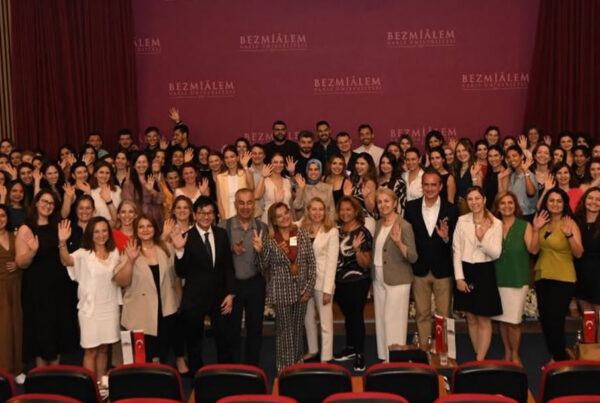
A highly productive and successful gathering of editorial board members from numerous orthodontic journals took place on October 23 as part of the 10th International Orthodontic Congress in Rio de Janeiro.
Representatives from most orthodontic journals participated and delivered insightful lectures on shaping editorial policies, making the literature more evidence-based, and exploring how modern technology is impacting orthodontic publishing. The meeting opened with remarks by 2020-25 Former WFO President Dr. Nikhilesh Vaiid, who emphasized how essential each editorial member is in providing the scientific community with clear, evidence-based literature, and shaping the future of our specialty.
The opening lecture was delivered by Journal of the World Federation of Orthodontists (JWFO) Editor-in-Chief, Dr. Vinod Krishnan, who outlined the editorial responsibilities owed to authors, reviewers, and both the scientific community and the public.
Dr. Krishnan also provided insights into the importance of incorporating diversity and equity into the selection of editorial board members and manuscripts for publication, emphasising the need to consider all contributors, including those from underprivileged backgrounds. The lecture also offered insights into the journal’s metrics, such as indexing and impact factor, and how these influence the journal’s standing within the scientific publishing landscape.
Dr. Krishnan also provided insights into the importance of incorporating diversity and equity into the selection of editorial board members and manuscripts for publication, emphasising the need to consider all contributors.
JWFO Associate Editor Dr. Carlalberta Verna outlined peer review guidelines and emphasized the importance of training reviewers, using refined language to communicate effectively with authors, highlighting the critical role of the entire process in enhancing manuscript quality and acceptance. Dr. Verna’s lecture explored various forms of engagement between journals and reviewers, including community building and training initiatives, to ensure the sustainability and integrity of scholarly communication. The session also sparked extensive discussion among attendees about the use of artificial intelligence in the peer-review process and strategies for employing such technology without compromising confidentiality agreements between authors and publishers.
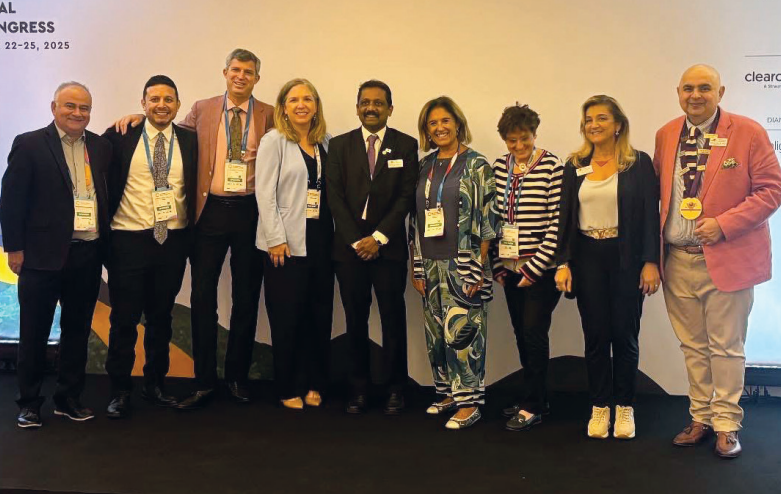
Participants in the IOC meeting of orthodontic journal editors gathered for a photo.
Research spin, defined as the biased or selective reporting of research findings to present a more favorable impression, was eloquently explained by Dr. Carlos Flores-Mir, who represented The Angle Orthodontist.
Dr. Flores-Mir’s lecture emphasized the importance of upholding research integrity by adhering to principles of honesty, transparency, and accountability. He also addressed how to mitigate research waste through the implementation of robust methodologies and the avoidance of unnecessary duplication to enhance the impact of scientific inquiry.
Orthodontics and Craniofacial Research Editor-in-Chief, Dr. Ambrosina Michelotti, thoroughly elucidated the pertinent issues of plagiarism and research misconduct. She highlighted the significance of utilizing plagiarism detection software within the manuscript workflow from submission to publication and discussed the advantages and limitations of various software available in the market.
The pressing issue of text recycling (self-plagiarism), wherein an author reuses their own previously published material, was examined extensively during Dr. Michelotti’s lecture. She underscored that maintaining research integrity necessitates effectively addressing retractions, removals, and expressions of concern.
Ms. Lindsay Allen, the senior publisher from Elsevier, shared valuable insights on how an editor and the organization can work together smoothly with the publisher. She discussed strategies to ensure successful publications and maintain the journal’s financial and operational stability. Details were shared on ways to boost audience engagement and improve journal performance, as well as Elsevier’s outlook on future publishing strategies, helping assess risks and opportunities for the journal’s sustainability.
Dr. Veerasathpurush Allareddy, representing Seminars in Orthodontics, explained how generative artificial intelligence is transforming the publishing world, including its advantages and challenges. He highlighted how data mining software and large language models assist in extracting evidence-based information from vast data sets and emphasized the importance of using this information in orthodontics. The lecture also covered the nuances of AI, noting that authors sometimes rely heavily on these systems, which can lead to conclusions based on biased information. He warned about the importance of data confidentiality when using AI tools, describing this as a double-edged sword.
Dr. Sergio Valvarde, representing the Journal of Clinical Orthodontics, highlighted creative ways to use online platforms to foster collaboration and strengthen engagement between the journal and its readers. He stressed how vital it is to involve the new generation of orthodontists in ensuring the journal’s sustainability and shared effective strategies for connecting with them through social media platforms. He also discussed the successful model adopted by the Journal of Clinical Orthodontics, which provides readers with evidence-based information — crucial in today’s world where the public is often confused about what is real, genuine, or fake scientific content.
The meeting, moderated by Dr. David Normando with the assistance of Dr. Krishnan, generated extensive discussion with numerous contributions and constructive comments from the audience. The discussion addressed the importance and drawbacks of utilizing artificial intelligence in the publishing field, the necessity for proper training of peer reviewers and editorial board members, methods to detect false science and uphold integrity in publishing, as well as strategies to combat fake social media posts about orthodontics.
Participants agreed to compile the deliberations and publish them in the February 2026 issue of the Journal of the World Federation of Orthodontists.